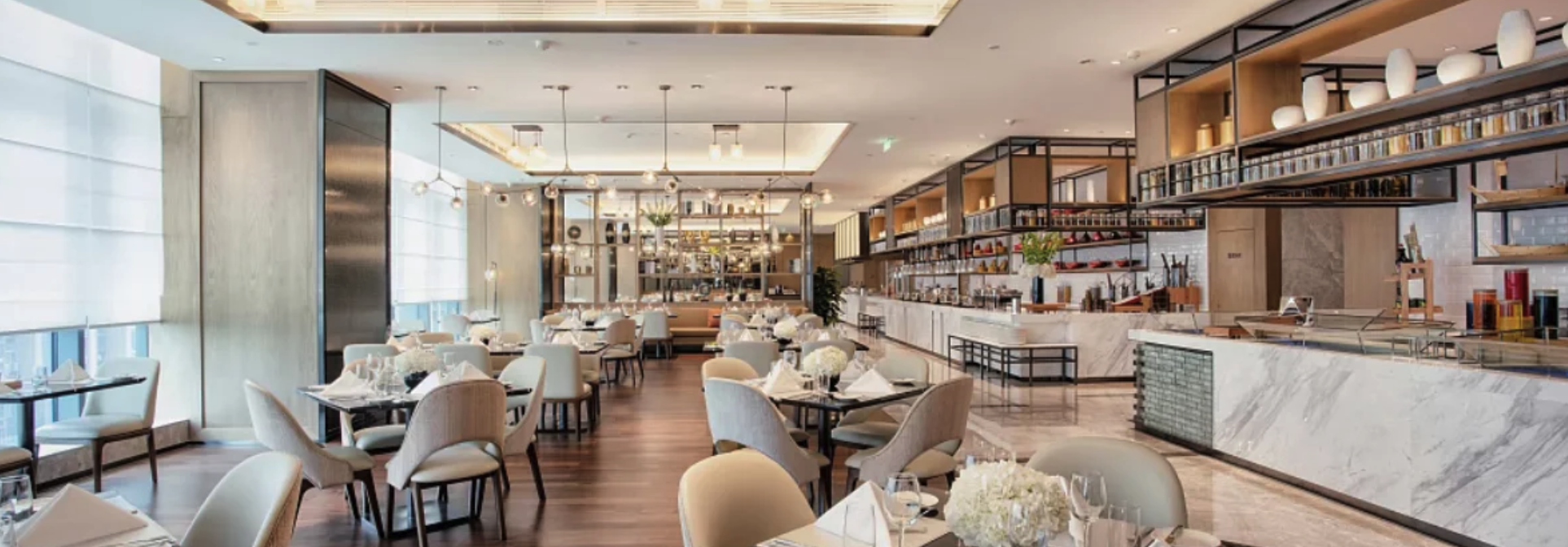


Walk into most hotel restaurants and you will notice something. They are beautiful. The lighting is considered. The furniture is expensive. The ceiling does something interesting. And yet, within minutes of sitting down, you cannot quite remember why you chose this one over the one next door.
That is not a design problem. It is a brief problem.
The world's best hotel infrastructure is extraordinary. The lobbies, the pools, the spas, the service: all exceptional. But the restaurants that sit inside those hotels are, with a handful of exceptions, interchangeable. They look different but they feel the same. And the reason is almost always the same: the interior designer arrived before the brand did.
I have been inside enough of these projects to know how it usually goes. A hotel decides it is time to refresh a restaurant. The interior designer is briefed. Concepts are presented. Materials are chosen. A direction is approved. Then, at some point deep in the process, someone asks: what is the story? What do we call it? Who is it actually for?
By that point, the answer has already been decided by the floor plan.
The brand gets fitted around the furniture. The name gets chosen to match the colour palette. The menu gets written to suit the aesthetic. And the result is a beautiful space with no identity. Somewhere that looks the right way but says nothing particular to anyone in particular.
I have seen this play out at every level of the market. Budget hotels, five-star groups, independent operators. The pattern is the same. The restaurants that work, the ones that build a following and hold it, are the ones where the idea came first. Not the interior. Not the mood board. The idea. Who is this for? What moment are they in? What does this place stand for at 7am, at lunch, at midnight? Why here and not anywhere else?
Those are not design questions. They are positioning questions. And they need to be answered before a single material is specified.
When positioning comes first, everything that follows gets easier and sharper. The interior designer has something to respond to, not just a brief to fill. The name emerges from the idea rather than being applied on top of it. The menu, the uniform, the signage, the social media: all of it pulls in the same direction because there is a direction to pull in.
When positioning comes last, the opposite happens. You end up with a restaurant where every element is good but nothing adds up to something. The food is fine. The service is warm. The space photographs well. But there is no reason to come back that you could explain to someone else. No story to tell. No identity that belongs to this place and not the next one.
This is not a creativity problem. The talent working in hospitality is exceptional. It is a sequencing problem. Brand strategy gets treated as a finishing touch when it is actually the foundation. And I understand why it happens. The pressure to break ground, hit opening dates, and manage budgets is real. Brand strategy can feel like something you sort out later. It rarely is.
The brief is not a document you fill out before the real work begins. It is the real work. Get it right and everything built on top of it will hold. Get it wrong, or skip it entirely, and you can spend a significant amount of money creating something that nobody will miss when it changes next year.
The restaurants worth visiting all have one thing in common. You can feel the idea behind them. You can sense that someone decided, before anything else, what this place was going to be and who it was going to be for. That decision, made clearly and early, is what separates a restaurant with a story from a restaurant with a nice interior.
In a world full of nice interiors, a story is the only thing that lasts.